Underground Boat Rides and the Shire
Earliest morning of them all, we had to be outside our hotel for pickup at 05:40. We met our Cheeky Kiwi guide, and made our rounds to other nearby hotels to grab the rest of our two-day travel family. It was us, a couple from LA that became our travel friends, four neighbours from Switzerland (originally from Portugal, Brazil, and Italy), one from Hong Kong, and one from the Philippines. So quite the eclectic little group.
We set out south, and besides a quick pit stop for coffee, we had a 2-3 hour drive to the Waitomo Caves. There we were guided into an underground limestone cavern, formed millions of years ago by the changing seafloor. In addition to seeing all the stalactites and stalagmites that take an insanely long time to form, we were also shown where the glowworms lived. As they were explaining it to us, they turned out the lights to point out these little blue-green dots glowing on the ceiling of the cavern.
They further explained that they are not actually worms at all, but the larval stage of the fungus gnat, and the whole larva doesn't glow, just their rear ends. So instead of calling them what they actually are, bioluminescent ass maggots, some clever cog called them glowworms, and it stuck. Well done, there.
They also explained, when they shone a light on them, that all the long sticky strands hanging down from the ceiling, were how they fed. In the pitch black, flies would get lost and head for the light thinking it was the exit, only to get caught in the sticky strands. Over the course of a week, the glowworm would pull that strand up and eat the fly. After a few months, the glowworm would pull all their strands up, cocoon, and eventually turn into what would be an annoying little gnat, were it to live long enough. But they emerge with no mouths, so they pretty much mate, lay eggs, and then die. The males live a little longer desperately trying to mate with as many females as possible, before dropping from starvation. Or getting caught in another larval strand and being eaten by another glowworm.
Biology lesson over, we boarded a boat in an underground river, and set out into the pitch black where the ceiling was covered by thousands of glowworms, making it look like a starry sky. Unfortunately, photos were not allowed as the insects are very sensitive to light, living their entire lives in the darkness, so I have nothing to show you here. They did let us take a photo as we were leaving the cavern to the outside world, which gives you an idea of where we had just come from.

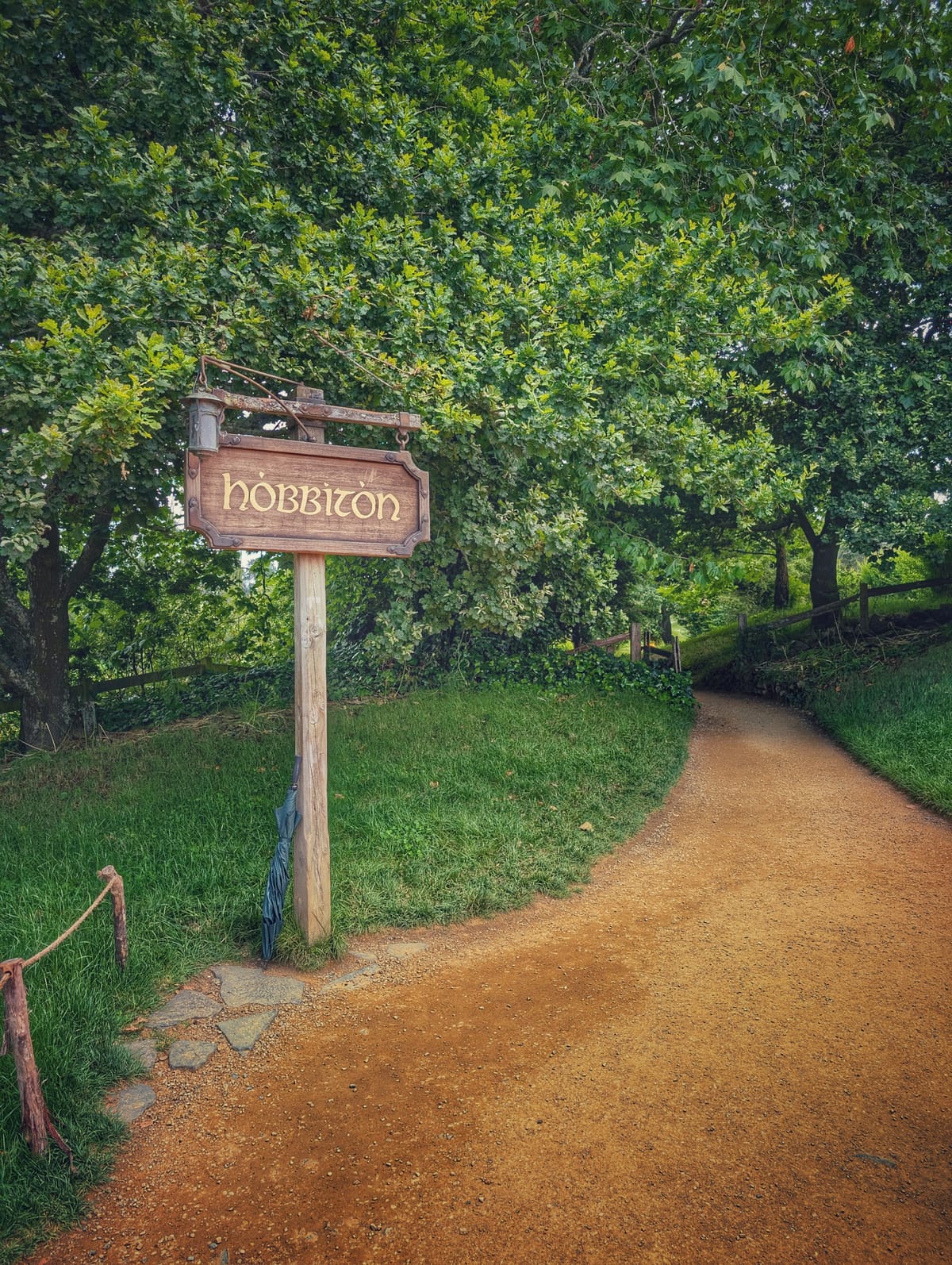
Shiny-ass maggots out of the way, our next stop—and highlight for a lot of people was—Hobbiton, the set of the Shire in Tolkien's Lord of the Rings. When Peter Jackson, a native Kiwi, first contracted with this rural sheep farmer who had no idea what these books were about, he agreed to return his land to a sheep pasture when they were done. As such, Hobbiton was intentionally not built to last. When the Lord of the Rings trilogy did well, and they made The Hobbit, this time they built them with longevity in mind as the site had already started garnering attention from fans.
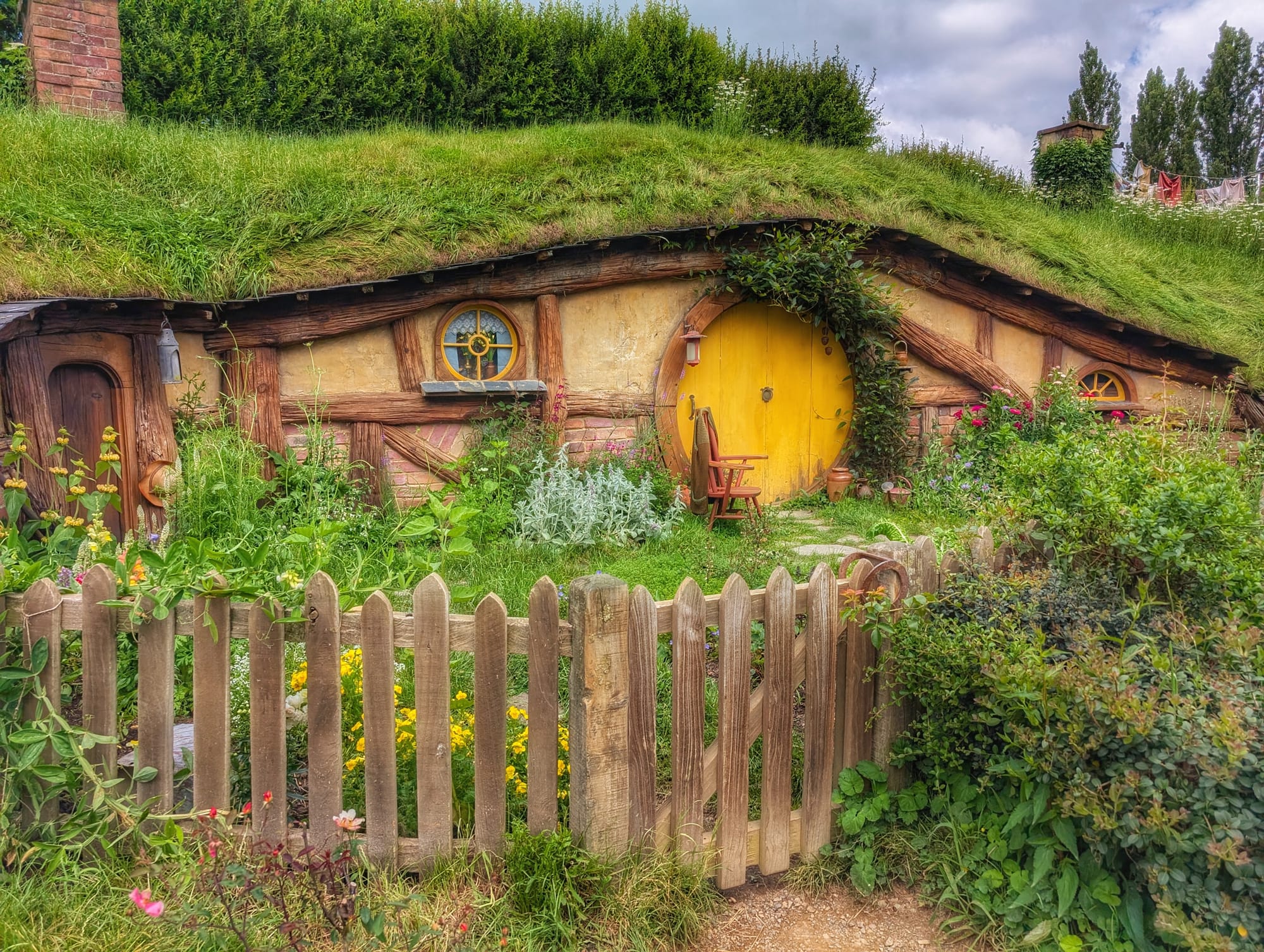
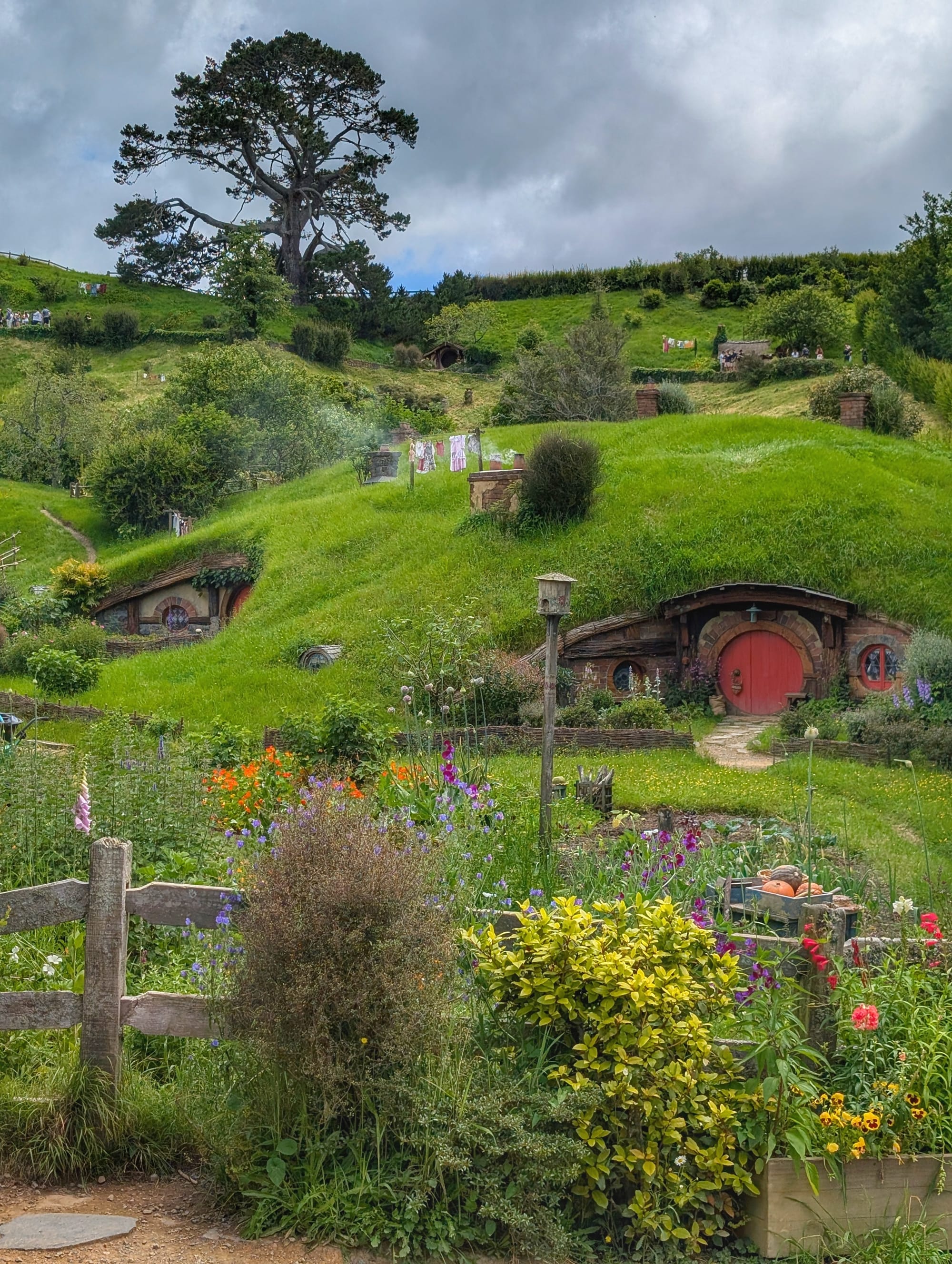
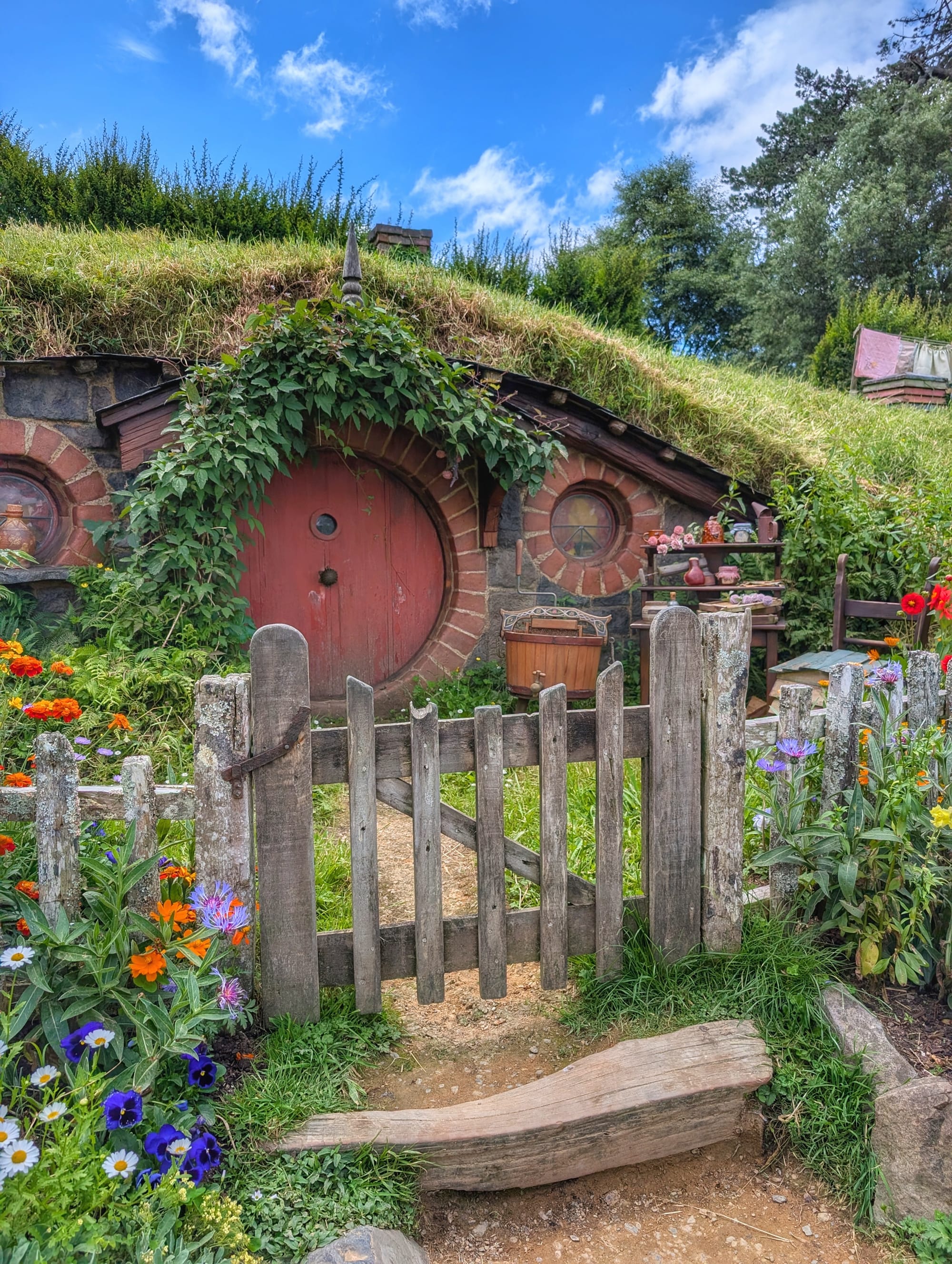
When our tour time arrived, we boarded the Hobbiton buses from the visitor centre, and took a 15-minute drive through the winding hills to our drop-off point with our guide. She led us through the set pointing out the various hobbit holes, as well as the different sizes of the doors. Since hobbits are much smaller than humans, they had to use a lot of visual trickery to convey this, including having some hobbits homes much smaller than others, depending on what they were being used for.
The homes, we learned were sadly just façades and didn't actually go into the hills. Some part of me knew this would be the case, but I was still sad to confirm it. There was one home we were allowed to stand in the doorway of and open, but there was nothing inside, just a shallow place to stand. We obviously walked past Bag End, the home of Bilbo and then Frodo, but weren't allowed to go in for the same reason of there being no in. That was apparently all filmed off set.
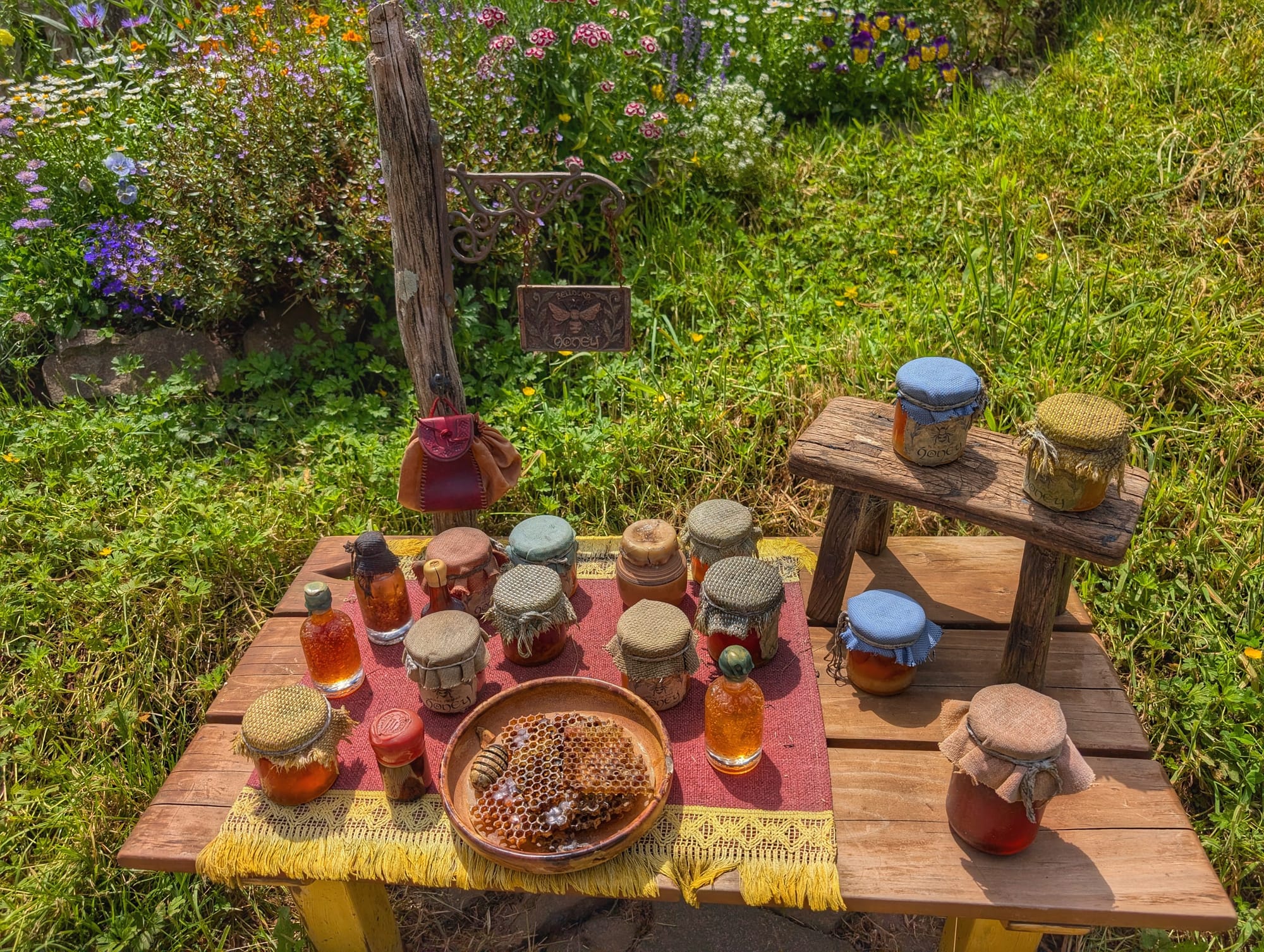
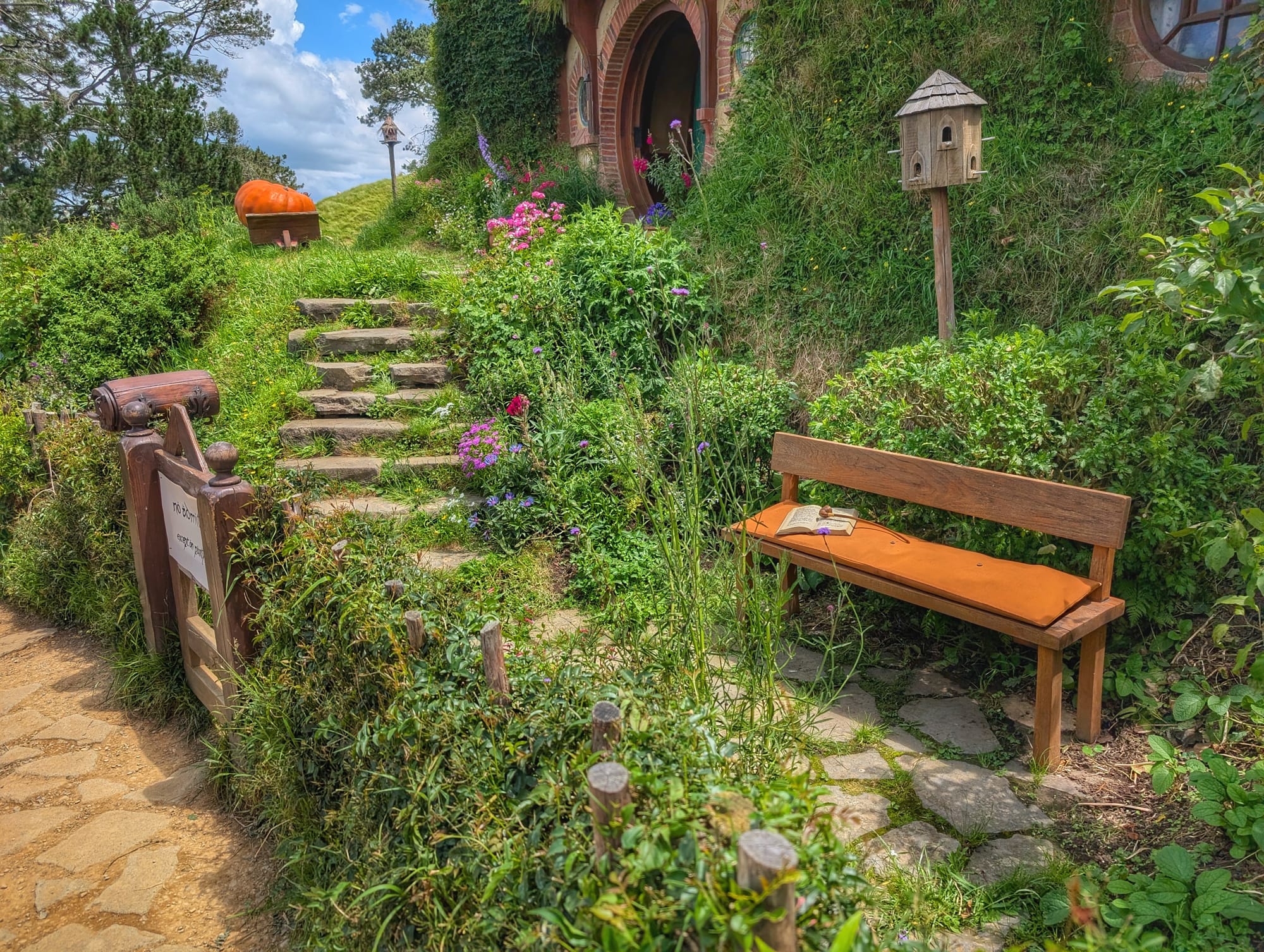
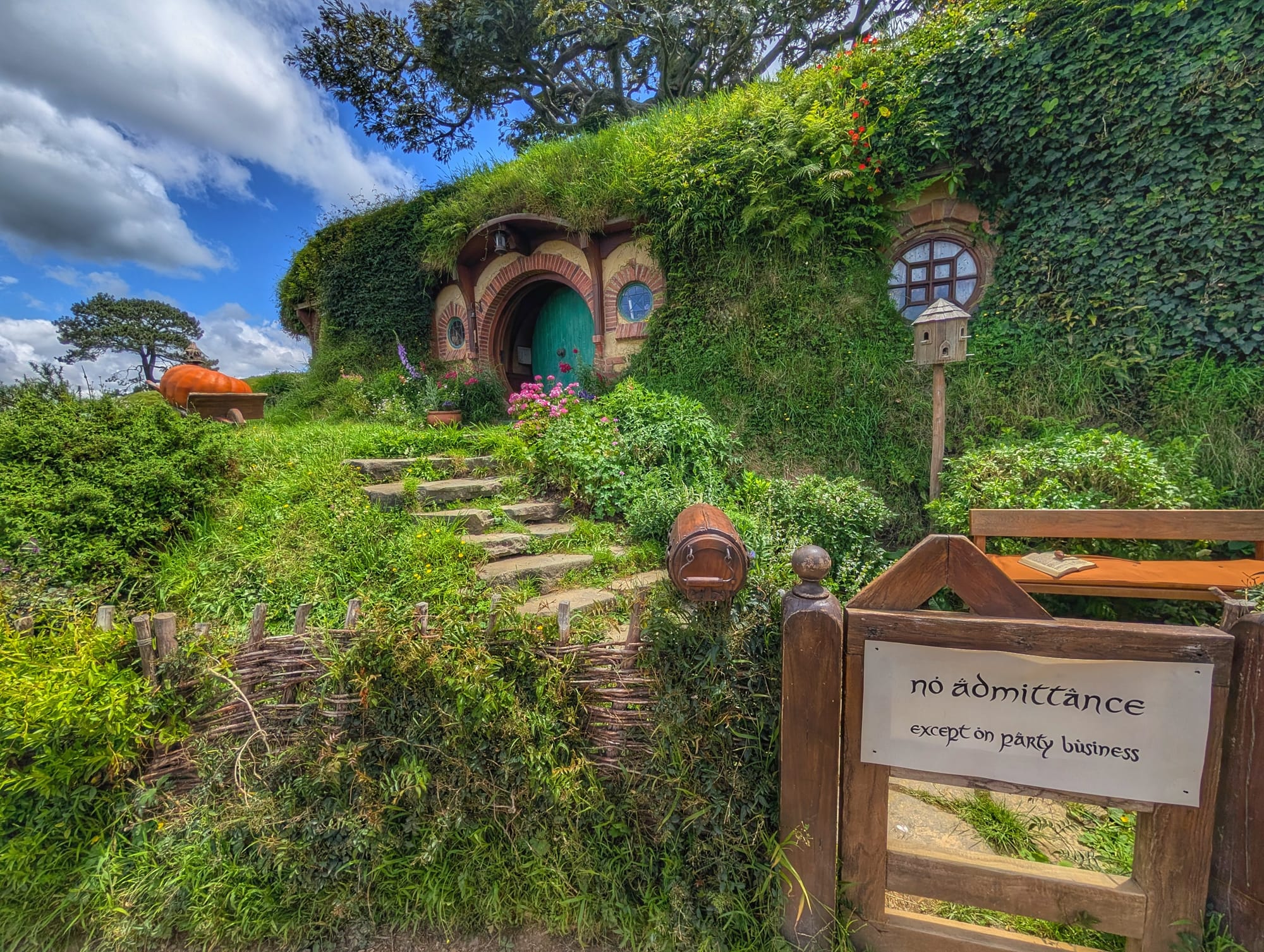
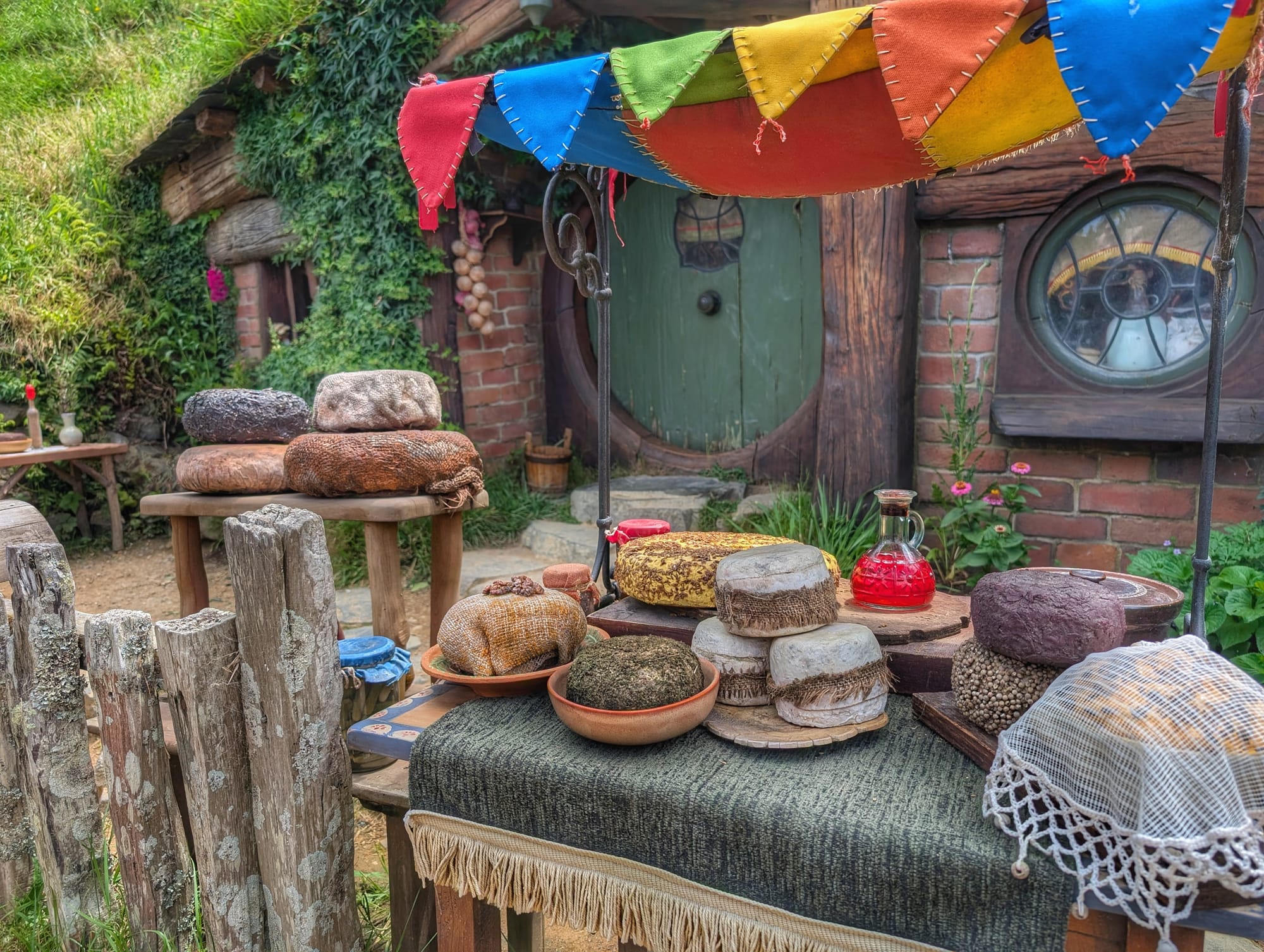
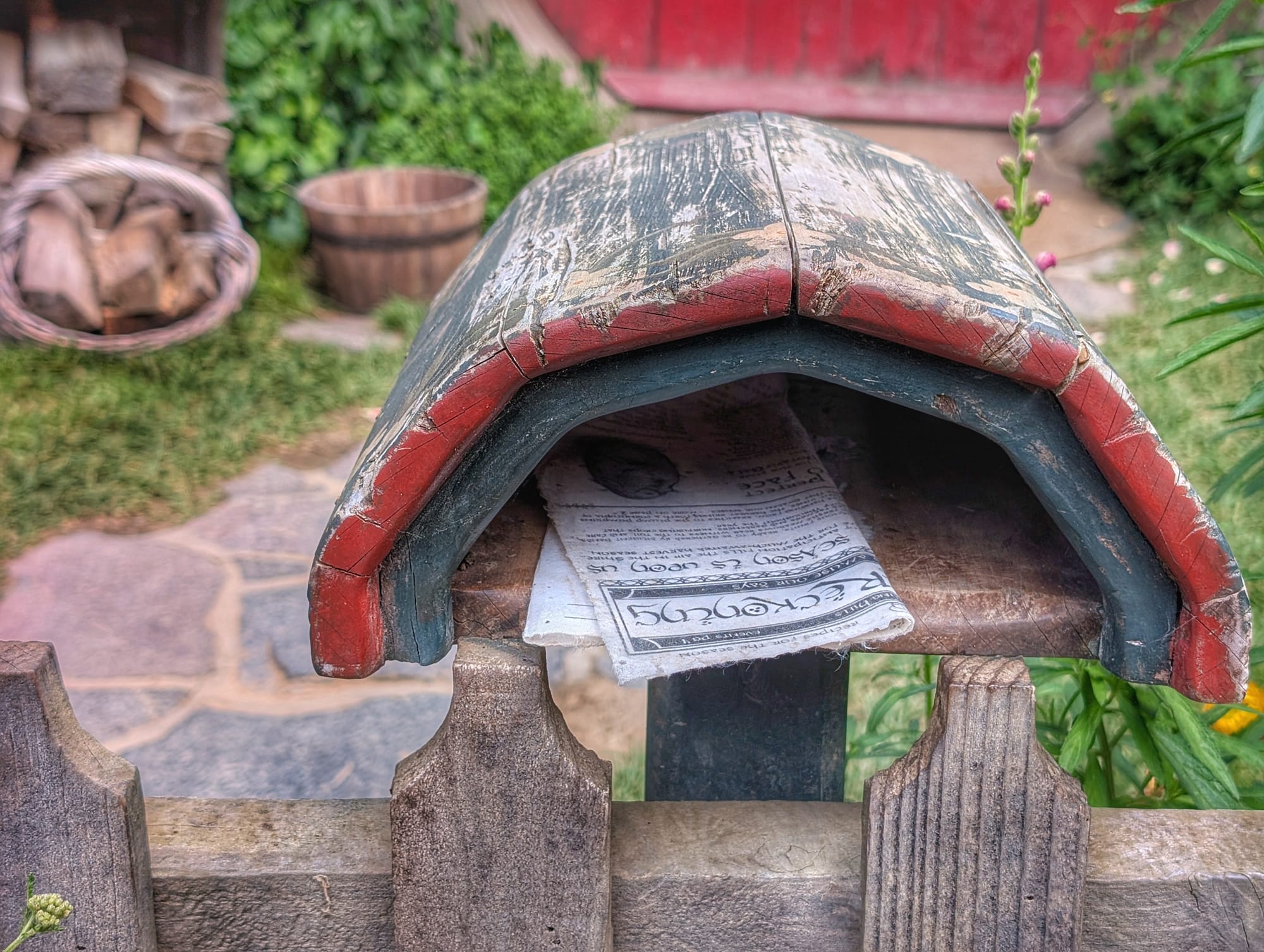
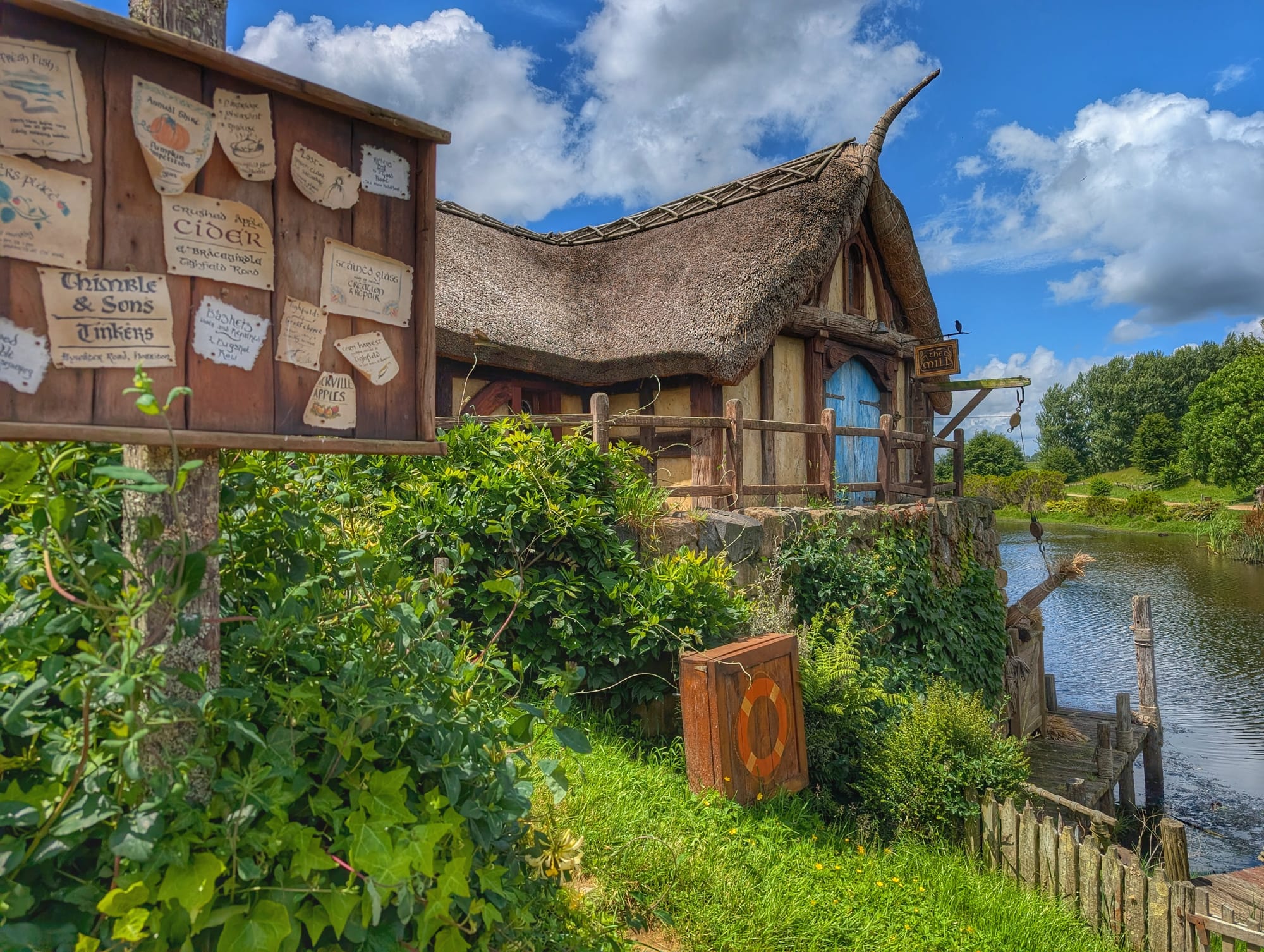
As our tour through the hills was wrapping up, they did reveal that because there had been so many visitors over the years, they had recently built two functional hobbit homes that we could walk through. As filming wrapped over a decade now, neither of these existed when filming was happening. But regardless, I absolutely loved them. All the detail that went into the set pieces outside was cool and all, but the work that they did inside… I want to live in one of those, were it actually functional. They were so cosy!
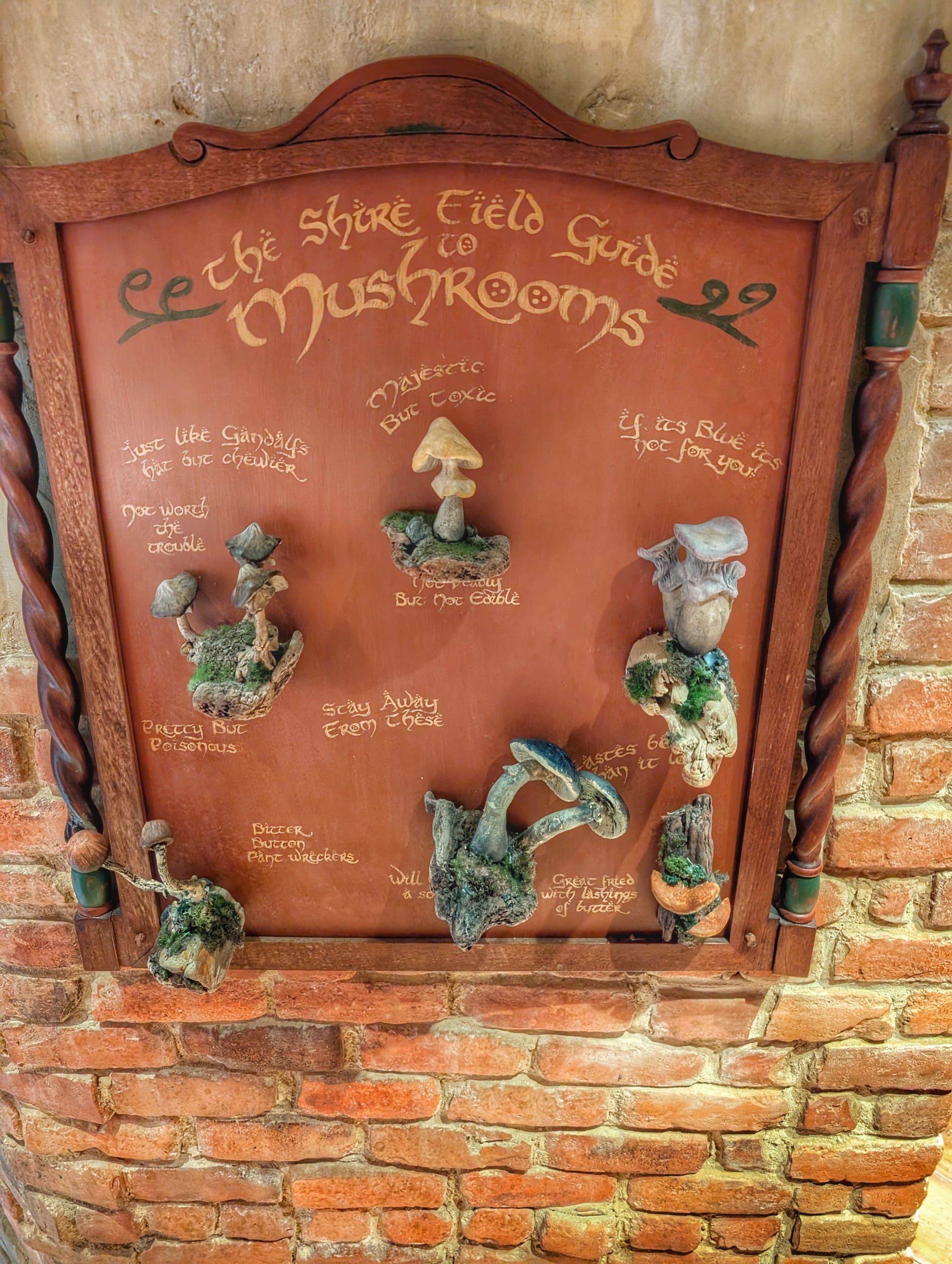
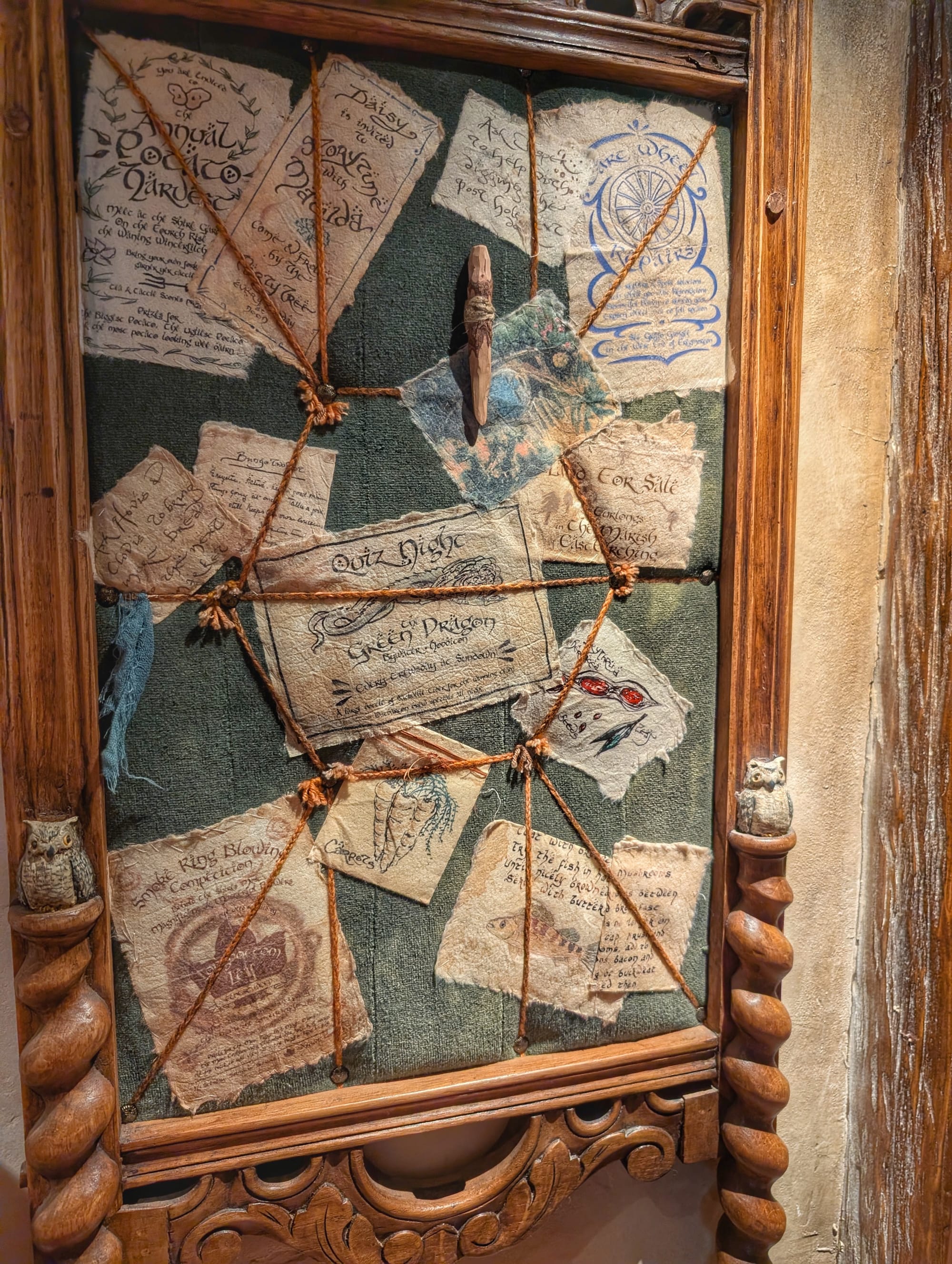

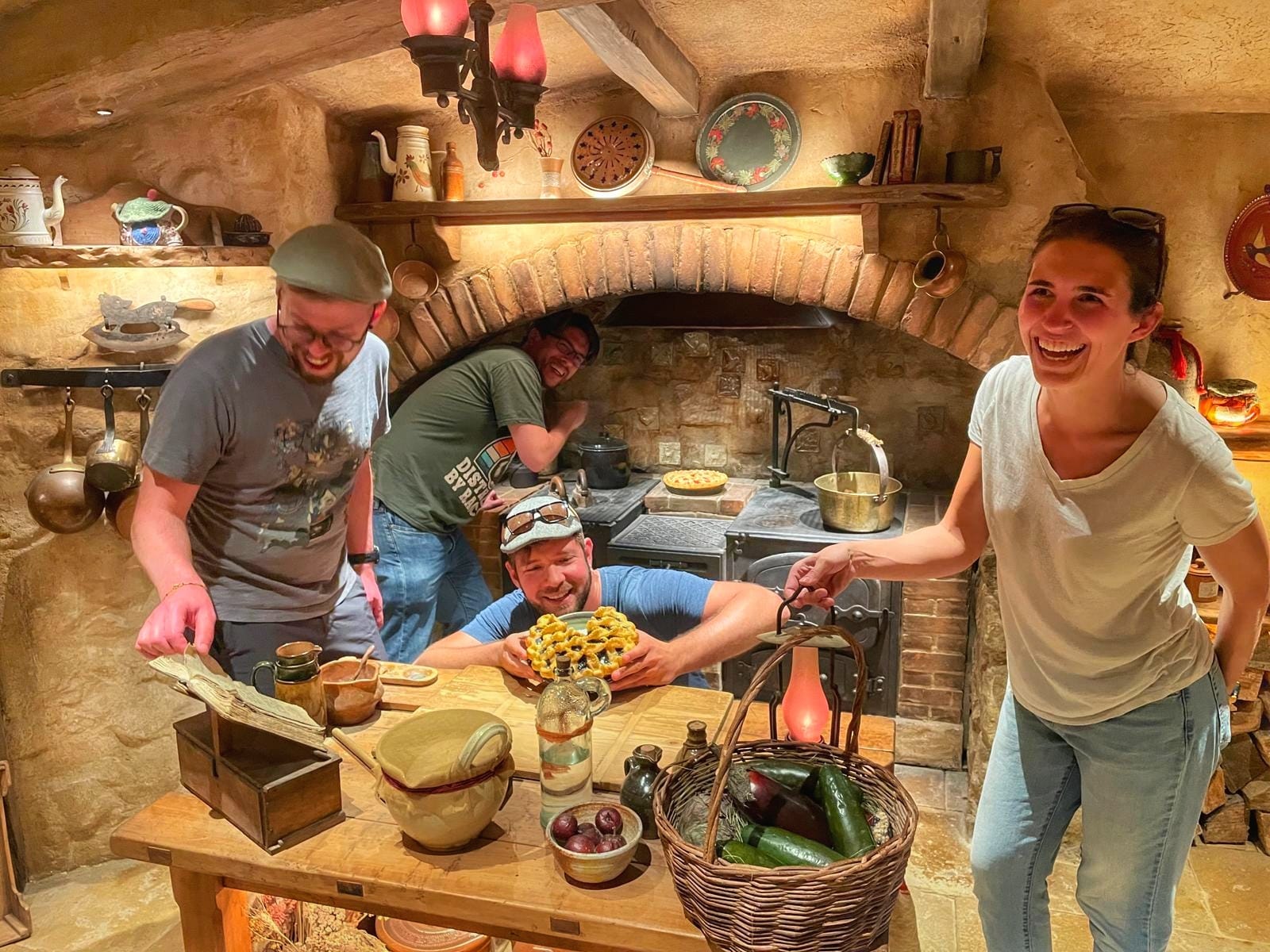
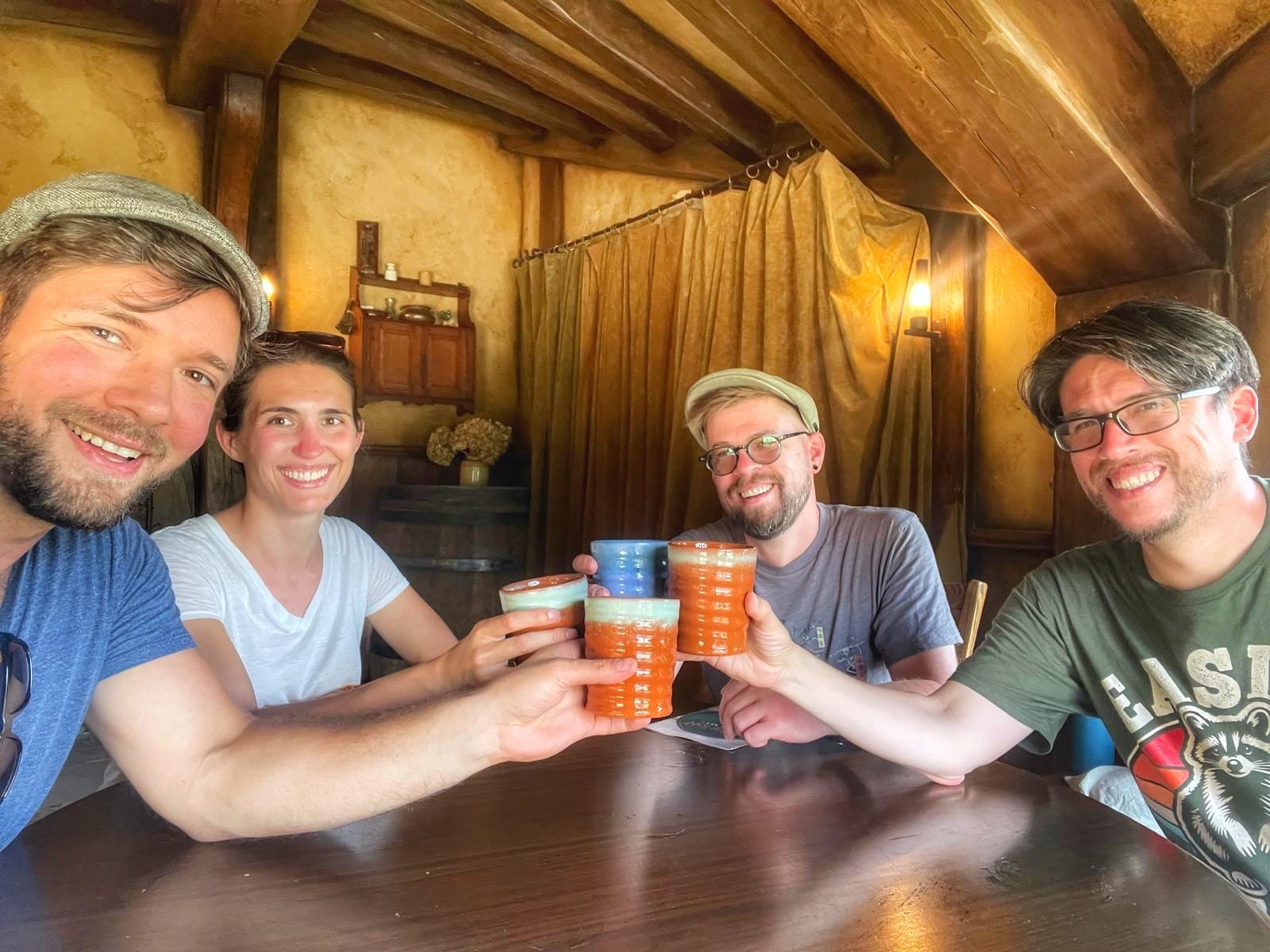
Our tour ended at the Green Dragon Tavern where we each received a free drink—brewed on premises—met our group, and bussed back to the visitor centre. I had wanted to find something in the gift shop, but it was all way too over-commercialised. Still looking for that cloak though…
Our first day ended when we eventually made our way into Rotorua, a city heavy with geothermal activity. Since New Zealand exists as a result of volcanos and tectonic activity, there are many places like this throughout the Ring of Fire where the water is naturally hot and element-heavy. Here, there just so happened to have a lot of sulphur in the water, which gave the town that lovely rotten egg smell. But it does do wonders for the skin.
Our hotel even had a direct feed of hot sulphur water for the pools that we could soak in. But due to me not wearing sunblock and having legs that were still lobster-red, I figured sticking them in 40 °C water was probably not the best idea. Especially since the shower was at times painful. So we just had dinner, and I relaxed for the evening—only slightly salty that I wasn't able to soak. Stupid sun… every vacation…grumbling intensifies.